A device with a camera
A laptop, tablet or phone works. Prop it up so you don’t need to hold it for 45 minutes.

Your consultation happens on a video call. Here’s how to get set up, what we’ll cover, and what happens if something needs to be done in person.
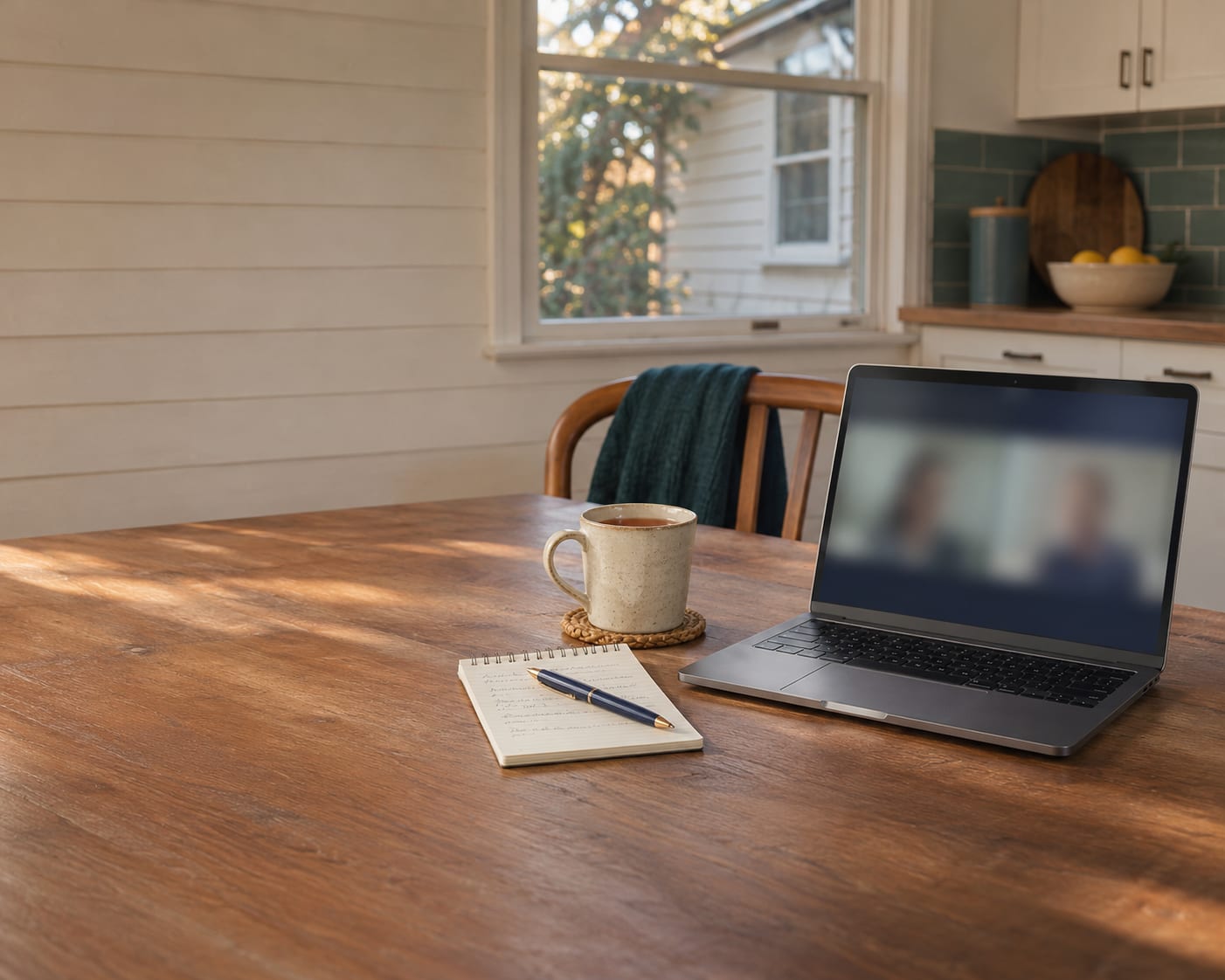
A laptop, tablet or phone works. Prop it up so you don’t need to hold it for 45 minutes.
Sit close to your router if you can. If the call drops, we have a backup so the consultation can carry on.
Somewhere you can talk openly. A kitchen table, a home office, a parked car. Whatever works for you.
We ask about how you sleep, how your days feel, your health history and your routine. Someone who shares your bed or home may have noticed things you haven’t. You’re welcome to have them join for part of the call.
Towards the end, we go over the suggested next steps. If any of them cost extra, we tell you the price.
Afterwards: you receive a written plan, and we send a letter to your GP.
Video suits a lot of sleep care. Some things still need a test or an examination in person. We’ll be upfront when that’s the case.
Check in online shortly before your time, then join the call.